Weidenbaum Center Newsletter October 2025

About our Center

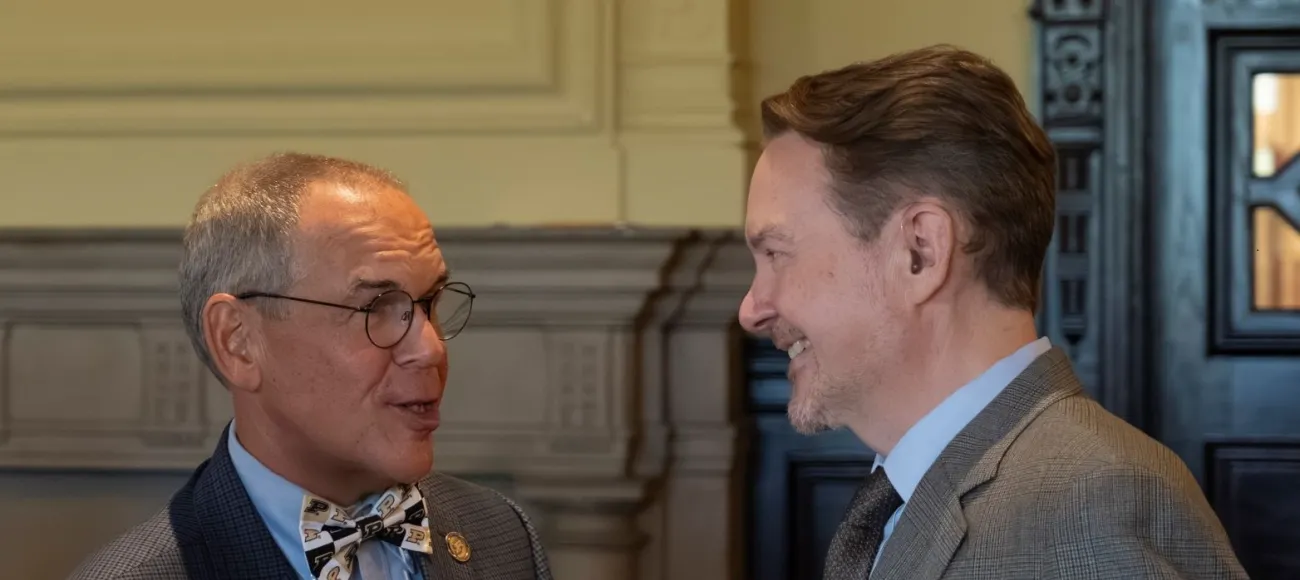
The Weidenbaum Center is a research institute at Washington University in St. Louis that supports social scientific research in the fields of public policy, economics, political science, and sociology. Led by Weidenbaum Center Director Andrew Reeves (pictured), the Center funds faculty research, provides administrative support for research activities, and sponsors a wide range of public affairs programs. In doing so, the Center serves as a bridge between scholars, policymakers, and the general public.

Through unbiased empirical research and events, the Center addresses many of the pressing public policy issues facing America and the world today.

The Weidenbaum Center provides significant research support for faculty in the departments of Economics, Political Science, and Sociology. This support allows a wide array of faculty members to participate in a variety of impactful research, and is of particular importance to our younger faculty who are just starting their research careers. Research efforts contribute to work that addresses key social issues locally, nationally, and globally, and enhances the prominence of Washington University in the academic and policy world. Donations fund our grant programs which support this research. We could not support nearly as much research without this generosity.

Donate to the Center

Get added to our Listserv

VIEW OUR YOUTUBE EVENT VIDEOS


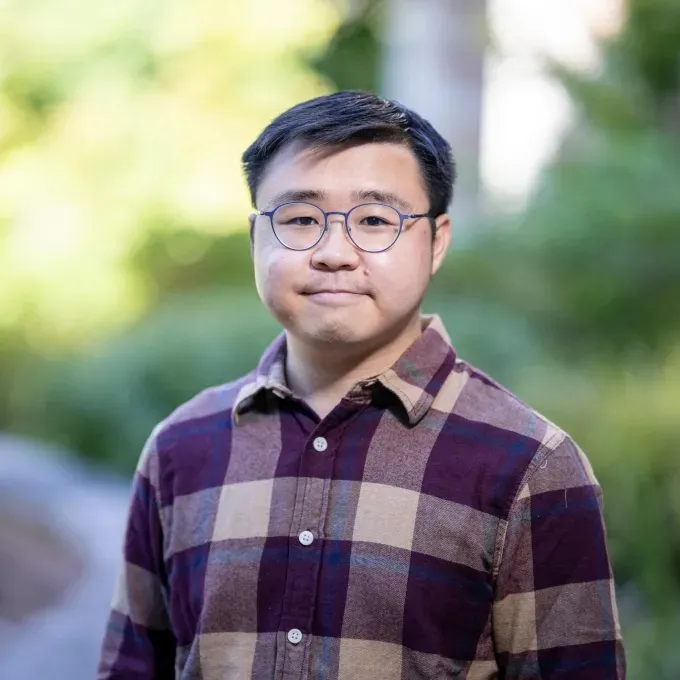
Profile of 2025- 2026 Weidenbaum Center Graduate Fellow Rudolph Chan

Rudolph Chan is a fourth-year Ph.D. candidate in Economics at Washington University in St. Louis. His research lies at the intersection of Labor Economics, Innovation, and Development. He focuses on uncovering novel stylized facts using micro-level data—such as firm and household datasets—and developing empirically grounded quantitative models to explore the sources and implications of labor market imperfections. One of his current projects examines how immigration influences firms' monopsony power over different types of workers, drawing on highly disaggregated data from Colombian establishments and households. Rudolph earned his BBA in Economics and Information Systems with First Class Honors from the Hong Kong University of Science and Technology in 2022, where he was featured in a promotional video for his program.

Weidenbaum Center Small Grant Awardees

Congratulations to our Fall 2025 Weidenbaum Center Small Grant Awardees

More info about our Small Grant Awards

Deniz Askoy, Leo Tien, and Zeynep Ceren Topac, all with the Department of Political Science

Disarmament and Reconciliation in Ethnic Conflicts

David Carter and Alma Velazquez, both with the Department of Political Science

Local Communities in the Global South Evaluate Controversial Corporate Behavior when Firms Adopt Costly Corporate Social Responsibility (CSR) Measures

Liz Chiarello, Department of Sociology

How Law Enforcement Pursues Cases Against Doctors

Caitlyn Collins, Department of Sociology

Does it Matter Where Parents Work from Remotely? Worker Evaluation by Remote Work Location and Gender

George-Levi Gayle, Martín García-Vázquez, and Limor Golan, all with the Department of Economics

Place-Based Policies, Family Structure, and the Geography of the American Dream

Martín García-Vázquez, Department of Economics, Filip Babalievsky, National Bureau of Economic Research, and Su Hwan Chung and Juyong Yang, both with the Korea Development Institute

Understanding Local Variation in the Effectiveness of Pro-Natal Policies in Korea

Jacob Montgomery, Department of Political Science

A Practical Solution for Missing Data in Social Science Experiments

Lucia Motolinia and Diana O'Brien, both with the Department of Political Science

Gender Effects on Candidate Platforms: When Nominating Women Matters for Policy

Julie Holland Mortimer, Department of Economics

How the Introduction of Ad-Supported Subscription Plans by Video-Streaming Platforms Affects Subscription Pricing, Platform Competition, Demand, and Consumer Well-Being

Peng Peng, Department of Political Science, Haohan Chen, The University of Hong Kong, and Yingtian He, Tsinghua University

Aspirational Nationalism: Enmity, Emulation, and Making of Chinese Identity (1840-1949)

Werner Ploberger, Department of Economics

Cointegration, Treatment Effects and the German Reunification

Shiran Victoria Shen, Department of Political Science

Climate Disasters and the Formation of Citizen Demand to Government-Led Climate Adaptation in China

Youngseok Shin, Department of Economics

AI Usage and Human Capital Development in the Modern Workplace

Betsy Sinclair, Department of Political Science

The Efficacy of Conversations with a Chatbot to "Prebunk" Against Election Misinformation

Michael Strawbridge, Department of Political Science

In the Thick of It: Operationalizing the Relationship Between Black People, Black Spaces, and Black Political Unity

Magit Tavits and Matthew Ribar, both with the Department of Political Science

Social Cohesion, Violent Conflict, and Customary Institutions in Liberia

Mira Vale, Department of Sociology

How Digital Health Researchers Frame Moral Questions and Enact Moral Values as they Innovate Beyond the Horizon of Regulation

Guanyi Wang, Department of Economics, Toru Kitawaga, Brown University, and Mengsi Gao, USC

Individualized Treatment Allocation with Endogenous Network Formation

Carly Wayne and Margit Tavits, both with the Department of Political Science

Wartime Vioence Exposure, Social Cohesion, and Resilience in Israel-Palestine

Featured upcoming events!

On November 11, join us for a conversation on the dramatic changes in economy policy during the first year of the Trump administration with economists and Weidenbaum Center Fellows Steve Fazzari and Chris Varvares.

On December 3, come celebrate the holidays and join us for the best event of the year, our annual holiday party!

Upcoming events